What if I Told You Resilience Could Change Everything?
March 18, 2025
This is a subtitle for your new post

Hey good people,
Did you know that 92% of leaders say resilience is the key to long-term success, yet most struggle to develop it?
What if I told you that your ability to bounce back is the most important skill you can develop as a leader?
We all want success. We all want to lead with confidence and make a meaningful impact. But the truth is, challenges, setbacks, and unexpected roadblocks are inevitable. The question isn’t whether you’ll face them—it’s how you’ll respond when they come.
I remember a time early in my career when I faced a major leadership challenge. A project I had put my heart into completely fell apart. The team I was leading felt discouraged, and I started questioning my own abilities. I had two choices—let failure define me or use it as fuel to improve.
I chose resilience. I took a step back, reassessed what went wrong, and pivoted instead of quitting. That experience didn’t break me—it made me a better leader. And that’s what resilience does.
Resilience isn’t about avoiding failure or pretending things don’t get tough. It’s about learning how to push forward, adjust, and grow through the experience. And when you embrace resilience as a leadership mindset, you not only transform yourself—you inspire those around you to do the same.
One Thought to Keep in Mind
Resilience isn’t just about endurance—it’s about adapting, learning, and leading through adversity. Strong leaders don’t just survive tough times; they use them as fuel to become better, wiser, and more effective.
The version of you that got you here isn’t necessarily the version that will take you to the next level. Growth requires change, and resilience is the bridge that helps you cross from where you are to where you need to be.
Two Strategies to Strengthen Your Resilience
1. Shift Your Perspective on Challenges
Instead of seeing obstacles as roadblocks, start viewing them as growth opportunities. The hardest moments in life often teach us the most valuable lessons.
Next time you hit a setback, instead of asking, “Why is this happening to me?”, reframe it: “What is this teaching me?”
Leaders who thrive don’t just endure difficulties; they use them to sharpen their skills, refine their leadership, and strengthen their teams.
2. Adjust, Don’t Quit
Resilience doesn’t mean you push forward blindly—it means you learn how to pivot.
Great leaders don’t let obstacles define them. They take a step back, reassess, and find another way forward.
When something doesn’t work out, don’t see it as a dead end—see it as a redirection.
Actionable Tip:
Instead of getting stuck in frustration, take five minutes to write down what you can control in a tough situation. Then, focus all your energy on moving forward in that area.
One Question to Reflect On
What’s one challenge you’re currently facing that could actually be a hidden opportunity for growth?
Action Step
This week, embrace one challenge instead of resisting it. Shift your mindset, find the lesson, and take one intentional step forward. The hardest part isn’t the challenge itself—it’s deciding how you’ll respond.
Final Thoughts
Resilience isn’t just about getting through tough times—it’s about growing through them. It’s the decision to keep going when things get tough, to learn from failure, and to push through discomfort because you know there’s something better on the other side.
The strongest leaders aren’t the ones who never fall—they’re the ones who always get back up.
So, let me ask you:
What’s stopping you from becoming the most resilient version of yourself?
Your next level of leadership is on the other side of resilience. Make the decision today to embrace challenges as stepping stones, not roadblocks.
Until next time: Be a Leader. Be a Learner. Be Kind.
Let’s keep leading together.
Dr. Roy Bishop, Jr.
share this
Related Articles
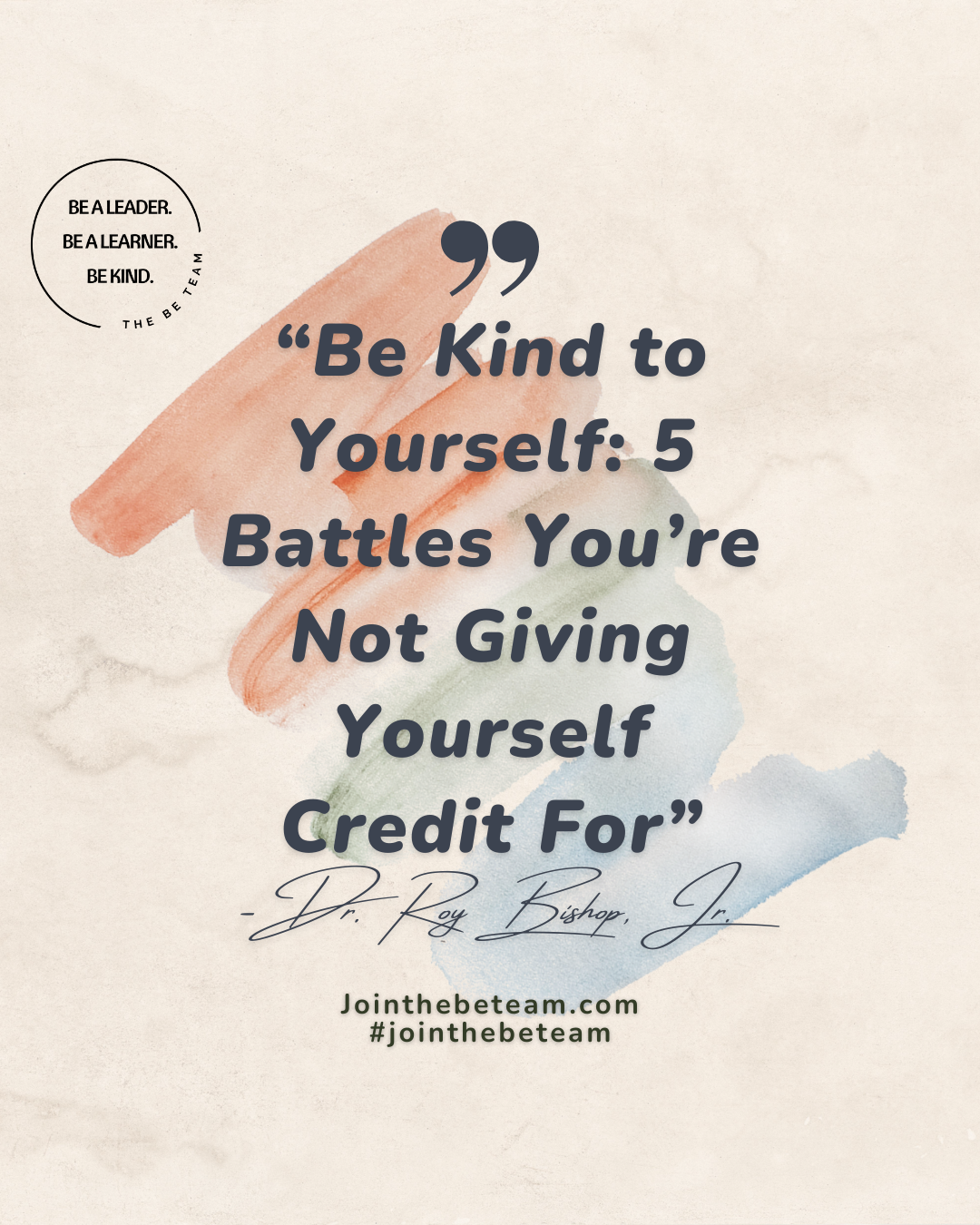
You’re fighting battles most people will never see. The emails you still answered when you were exhausted. The decisions you made when your confidence was low. The way you kept showing up for your family, your team, and your students when no one was checking on you. If you’ve been hard on yourself lately, I want you to hear this clearly: You’re carrying more than you’re giving yourself credit for. This week, I want to walk you through five quiet battles you’ve probably been fighting… and remind you to be kinder to yourself in each one. 1. The Boundary Battle You’ve poured into people who never poured back. You’ve carried responsibilities that didn’t belong to you. You’ve said yes when every part of you wanted to say no. That doesn’t make you weak. It makes you caring. But there’s a moment when caring turns into depletion. Being kind to yourself starts with this truth: Not everyone should have equal access to your energy. 2. The Confidence Battle You’ve survived things you didn’t think you’d get through. You’ve shown up in rooms where you questioned if you belonged. You’ve kept going on days when quitting felt easier. That’s not failure, that’s strength. You didn’t lose your ability. You just lost your reminder. Sometimes being kind to yourself looks like remembering what you’ve already overcome. 3. The Rest Battle Most high-capacity people struggle with this one. You convince yourself you’ll rest “when things slow down.” But things never really slow down, they just change shape. You’ve been running at full speed for too long. For your body. For your mind. For your nervous system. Rest isn’t a reward you earn at the end of the marathon. It’s the fuel that keeps you moving. Being kind to yourself means you stop apologizing for needing it. 4. The Letting Go Battle There are people, roles, expectations, and versions of yourself you’ve been holding onto out of habit. You’ve tried to fix situations that weren’t yours to fix. You’ve stayed in spaces your spirit already left. You’ve carried guilt for things that were never fully in your control. Here’s the truth: Not everything is meant to go with you into your next season. Letting go isn’t quitting. It’s making space for who you’re becoming. 5. The Resilience Battle You don’t feel strong because you’re still in the fight. But look at your track record: You kept moving when life froze you. You kept working when the pressure showed up. You kept believing, even when the path wasn’t clear. That’s not luck. That’s resilience. You don’t need a perfect plan to move forward. You just need the courage to take the next step. What To Do With This This Week I don’t want you to try to fix all five battles at once. That’s not realistic, and it’s not kind. Instead, pick one: - Boundaries - Confidence - Rest - Letting go - Resilience Then ask yourself: “What is one kind decision I can make for myself in this area this week?” Maybe it’s saying no. Maybe it’s going to bed earlier. Maybe it’s finally letting something, or someone… Maybe it’s just admitting, “I’ve been stronger than I realized.” Whatever it is, take that step. One Last Reminder You’ve made it through every hard day you thought would break you. You’ve handled more than most people know. You’re still here. You’re still trying. You’re still leading. Be kind to yourself this week. You’re doing better than you think. Be a Leader. Be a Learner. Be Kind. Roy Founder of The Be Team I help people who feel overwhelmed or unsure of themselves find confidence, clarity, and peace again. Everyone hits tough seasons, and it helps to have guidance and support. My goal is to help you grow, feel grounded, and trust yourself more, at work, at home, and in life. Because becoming your best self isn’t about titles, it’s about how you show up every day.
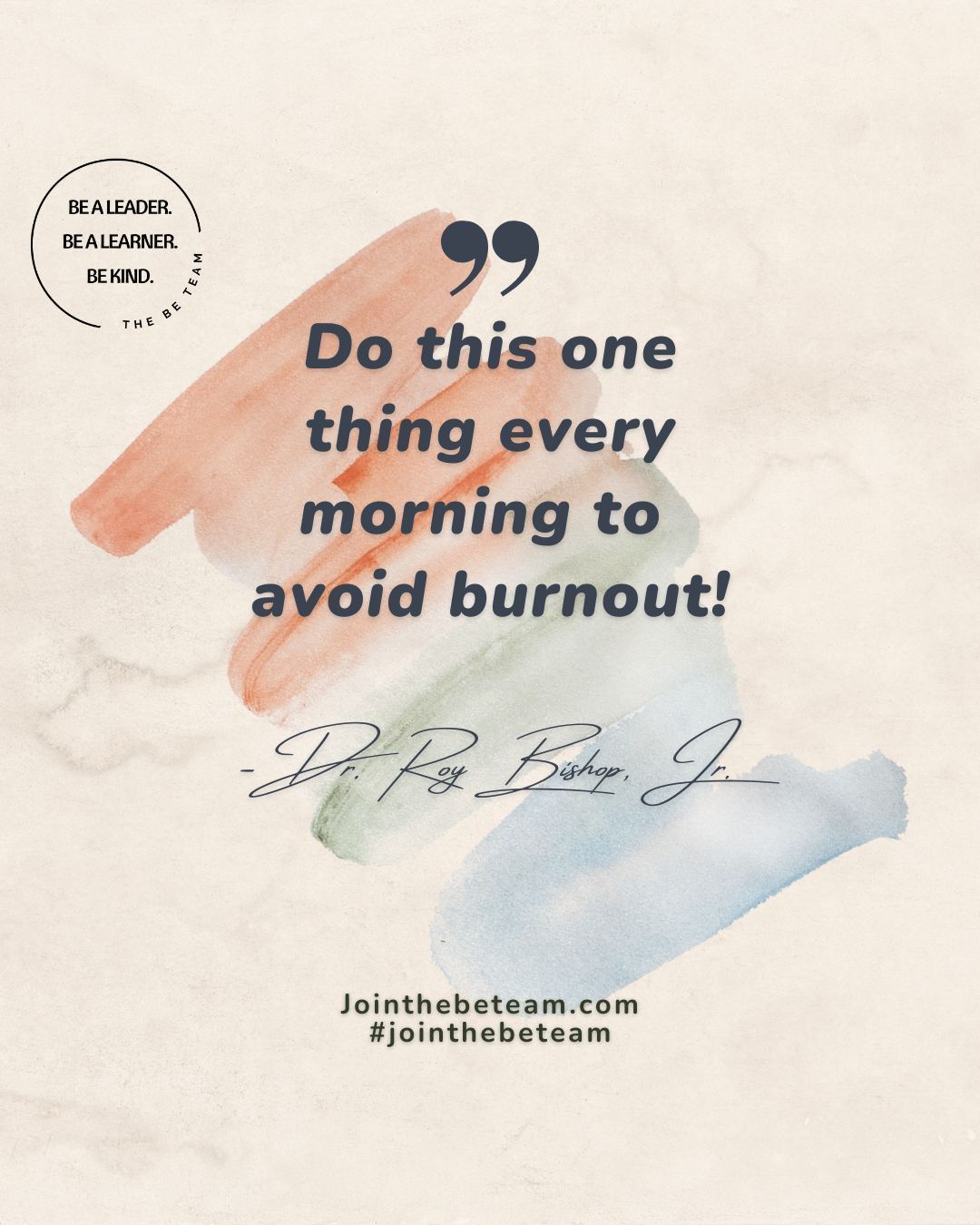
1 Truth · 2 Strategies · 1 Reflection Weekly Leadership Lift with Dr. Roy Bishop, Jr. If you want to avoid burnout, start your day with yourself before you give it away to everyone else. Most educational leaders wake up and immediately jump into emails, messages, or mental checklists of what needs to get done. Before the day even begins, you’re already reacting instead of leading. And when every day starts like that, burnout isn’t a possibility; it’s a guarantee. You can’t lead others well if you don’t lead your own morning first. 1 Truth The tone of your morning sets the temperature for your leadership. When you wake up rushing, your day stays rushed. When you wake up grounded, your day follows your rhythm, not everyone else’s. The best leaders don’t wait for peace to find them; they create it. That’s why every morning should begin with intentional stillness, a quiet moment to connect with yourself before the demands of the day take over. Whether it’s reflection, working out, journaling, or silence, those first minutes shape how you think, decide, and show up for others. 2 Strategies to Live It Out 1. Create a “No Noise” Zone (I have to do this in my car sometimes…) Spend your first 15–20 minutes without screens, texts, or social media. Instead, check in with your mindset. Ask yourself: What do I need to feel centered today? Maybe it’s gratitude, calm, or focus. When you take control of your internal environment, you can handle anything that happens in your external one. 2. Set an Intention, Not Just a Schedule. Before you dive into your calendar, decide how you want to be today, not just what you want to do. For example: “Today I will lead with patience.” “Today I will listen more than I speak.” This simple shift helps you lead from clarity instead of chaos. 1 Reflection Question What’s the first thing you focus on each morning and how does it impact the rest of your day? Take Action Tomorrow morning, try this: wake up 15 minutes earlier. Don’t check your phone. Don’t open your email. Just sit with your thoughts, breathe, stretch, or write. Give yourself the first and best part of your day. That single act of discipline will protect your energy more than any time-management strategy ever could. Final Word Avoiding burnout doesn’t require a total life overhaul, it requires a consistent commitment to start your day on purpose. You can’t pour into others if you’re already empty when the day begins. Lead your morning, and you’ll lead your mindset. Lead your mindset, and you’ll lead your day. Lead your day, and you’ll lead your life. Until next time, Be a Leader. Be a Learner. Be Kind. Let’s keep leading together. Dr. Roy Bishop, Jr. Founder of The Be Team I help leaders and future leaders, from the classroom to the boardroom, build confidence, protect their peace, and grow into the best version of themselves by learning to grow through the seasons of feeling stuck, burnt out, or overlooked. It happens to all of us at some point so why not prepare for it? Because leadership isn’t about titles; it’s about becoming. And I believe that everyone, no matter their age or experience, deserves the chance to be the leader they were meant to be.

1 Truth · 2 Strategies · 1 Reflection Somewhere along the way, I started confusing being busy with being effective. I’ve always been told that working longer hours and sacrificing rest somehow proves our dedication. But being exhausted isn’t a sign that you’re doing great work. It’s a sign that you’re doing too much of the wrong work (there is such a thing), the kind that drains your purpose instead of fueling it. As educational leaders, we pour into everyone else, students, staff, and families and often forget to pour back into ourselves. Leadership isn’t about doing it all. It’s about doing what matters most, with energy, clarity, and intention. You can’t lead effectively if you’re constantly running on fumes (I have never seen this done well). 1 Truth You’re not tired because you’re weak. You’re tired because you’re operating without renewal. When you ignore rest, reflection, and boundaries, you trade long-term effectiveness for short-term validation. Exhaustion might look like dedication, but it’s really depletion. Strong leaders understand that protecting their energy isn’t selfish, it’s smart. The best version of you isn’t the busiest one. It’s the one that’s focused, fueled, and fully present for your team, your students, and yourself (we often forget about ourselves in the equation). 2 Strategies to Live It Out Audit Your Energy Before the week gets away from you, take a few minutes to ask yourself: What gives me energy? What drains it? Then make one small adjustment. Maybe it’s saying no to an extra meeting, taking a short walk instead of scrolling your phone, or turning off notifications after hours. Awareness creates alignment, and alignment builds sustainability. Rest Without Guilt Rest is not a reward for getting everything done. It’s a requirement for showing up as your best self. Schedule your recovery time like any other meeting (seriously, put it on your calendar now or it won’t happen). Sleep, quiet reflection, and personal time don’t make you soft. They make you last. The leaders who thrive long-term are the ones who protect their peace and model balance for others (I used to be really bad at this). 1 Reflection Question What is one responsibility or mindset I’ve been holding onto that no longer deserves my energy? Take Action Take ten minutes today to define your energy boundaries. Write down three things that drain you and three things that refuel you. Keep that list somewhere visible. Every time you start to feel overwhelmed, go back to it. Your energy is your leadership advantage so protect it. Final Word Exhaustion is not a requirement of leadership; it’s a signal that something needs to change. You don’t have to prove your worth by overworking yourself. You prove it by showing up whole, grounded, and consistent. When you protect your peace, you amplify your presence. When you slow down, you gain clarity. When you take care of yourself, you give everyone around you permission to do the same. Until next time, Be a Leader. Be a Learner. Be Kind. Let’s keep leading together. Dr. Roy Bishop, Jr. Founder of The Be Team — helping educational leaders lead with purpose, balance, and mindset. I help leaders and future leaders from the classroom to the boardroom, build confidence, protect their peace, and grow into the best version of themselves by learning to grow through the seasons of feeling stuck, burnt out, or overlooked. It happens to all of us at some point, so why not prepare for it? Because leadership isn’t about titles; it’s about becoming. And I believe that everyone, no matter their age or experience, deserves the chance to be the leader they were meant to be.
STAY UP TO DATE
the latest from the be team
Receive an alert anytime a new post drops
Contact Us